
All Blog posts
News and tips & tricks and user stories from the xm systems HQ.
News, Tips & Customer Stories from xm systems HQ
News and tips & tricks and user stories from the xm systems HQ.
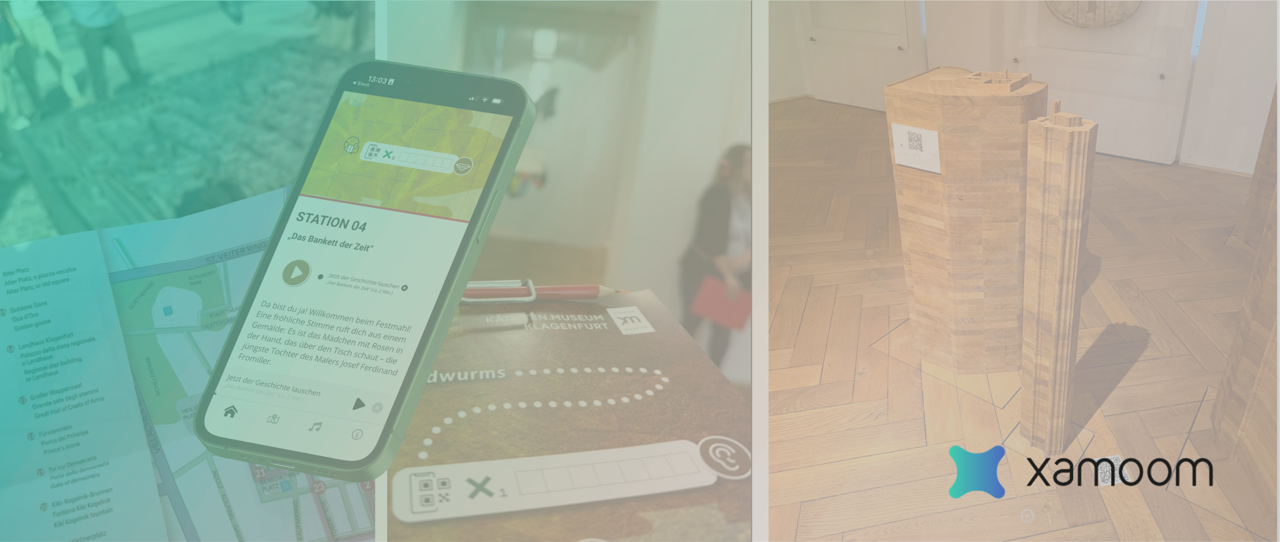
How the kärnten.museum easily implemented a city tour and museum quest themselves using their existing xm systems system.
Sometimes a project perfectly demonstrates what a technology was actually built for.
On August 26, the results of the Interreg project PLACES – Promoting Landscape, Accessibility and Culture for Experiential and Sustainable Tourism were presented at the kärnten.museum Klagenfurt. The focus is on accessible, inclusive, and sustainable tourism experiences – developed together with locals and designed for as many different visitors as possible.
xm systems is just a small part of a large, international project here. But for us, it is a particularly wonderful one. Because two of the digital experiences demonstrate exactly what we mean by a flexible location-based content platform:
Discover a city. Experience a museum playfully. And not have to build a new digital system to do it.
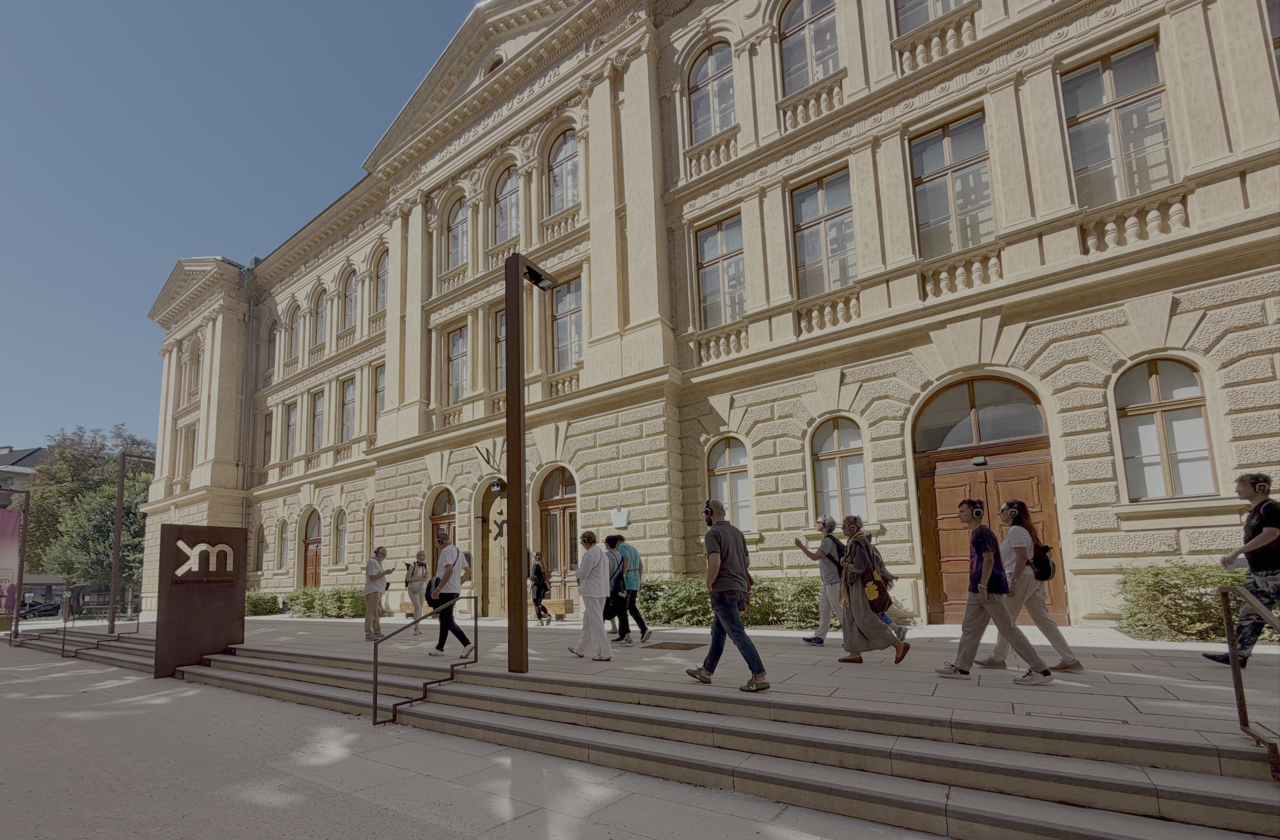
The PLACES Silent Play leads visitors out of the museum and into the city. Not as a classic guided tour with a fixed schedule and tour group, but as a self-guided discovery tour.
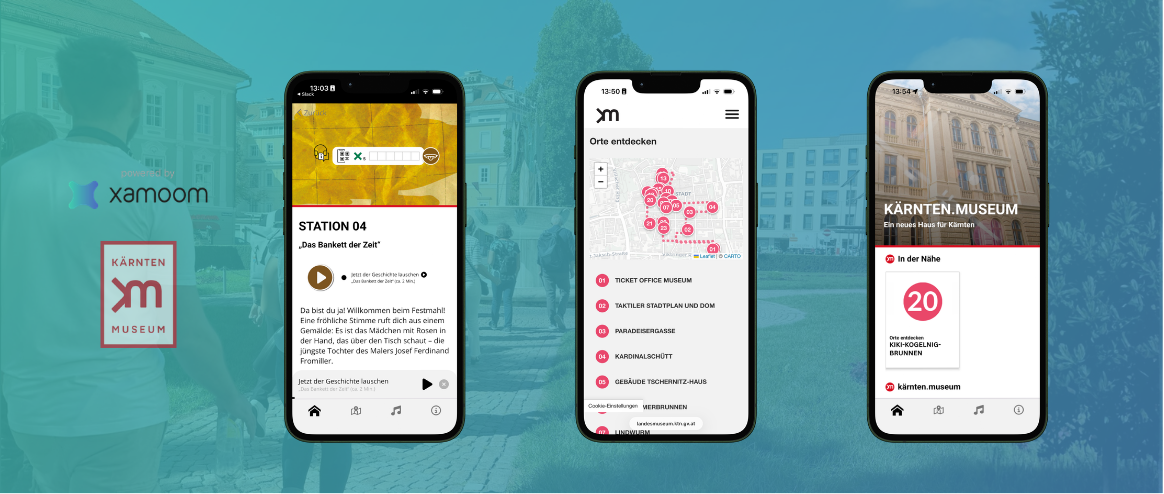
A QR code opens the digital guide. A map shows 24 stations in downtown Klagenfurt. The order is deliberately left open: you simply choose the audio track closest to your location and listen to people from Klagenfurt talk about their city.
What makes it special isn't just the locations. It's the personal stories behind them. Real people connect their memories and perspectives with places in the city – and these in turn with themes and objects in the kärnten.museum.
This creates a connection between the city and the museum, the present and history, personal memory and cultural heritage.
The folder itself is already available in German, Italian, and English. Visitors can experience the tour at their own pace and determine their own route.
The second digital experience stays in the museum – and becomes more playful.
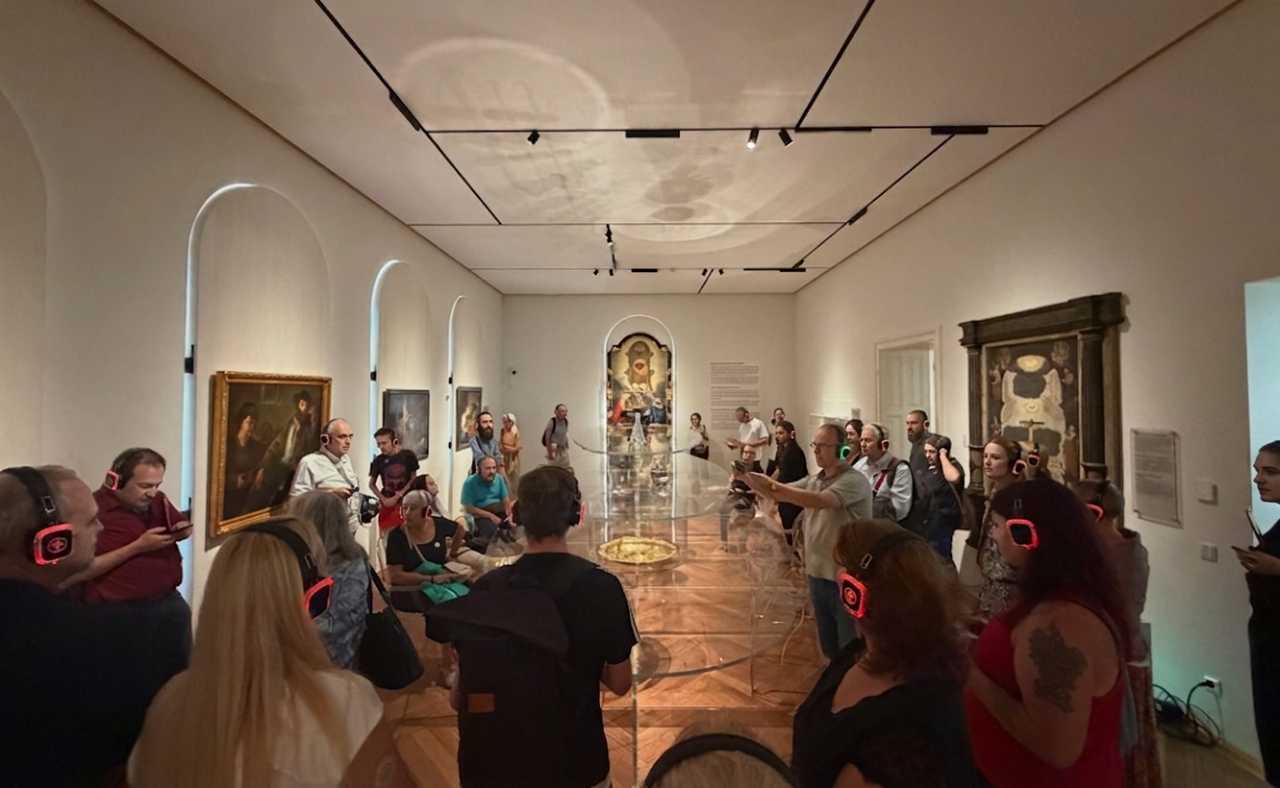
In the museum quest "The Treasure of the Lindwurm", a beautifully designed puzzle folder guides you through several stations. QR codes open the corresponding digital content and audio stories. Terms like Listening, Root, Gaze, Memory, and Treasure already make it clear what it is all about: The museum is not just meant to be looked at, but to be experienced in different ways.
This turns a classic tour into a small mission. The technical idea behind it can now also be found in wunder.quest: QR codes don't just open content, they become stations of a story that unfolds in real space. Visitors follow clues, listen to stories, observe more closely, and gradually unlock the content.
And this is exactly where digital storytelling meets physical space: The smartphone does not replace the museum. It helps you to look more closely.
For us, however, the real xm systems story lies behind the scenes.
The kärnten.museum has been working with xm systems for years. Audio guides, digital museum information, location-based content, and their own museum app are managed via the existing system.
Therefore, no new isolated technical solution had to be developed for PLACES.
The City Guide and the QR code quest could be implemented by the museum team themselves using the existing xm systems system – out of the box and without additional development costs.
This is exactly what xm systems was built for: Content should be able to evolve without having to start a new digital project for every new idea. The CMS connects content with locations and makes it available via different channels – from QR codes, location triggers, and beacons to smart apps and the mobile web.
Anyone who already uses xm systems therefore has not just an audio guide or an app, but an infrastructure upon which new experiences can be created.
PLACES takes an in-depth look at accessibility and inclusion. And this is precisely where the advantages of a flexible digital system become particularly clear.
People experience content in different ways. Some prefer listening, others reading. Some want to follow a predefined route, while others need more time or may want to skip certain stops. Some are happy to install an app – others simply want to scan a QR code and get started right away.
xm systems supports these different ways of accessing content:
For us, accessibility is therefore not simply another box to tick on a feature list.
It means giving people different ways to access the same experience.
The PLACES project shows how much can be created when good content, local stories, and a flexible digital infrastructure come together.
The Silent Play makes Klagenfurt audible through the voices of its residents. The Lindwurm Quest transforms the museum visit into a playful journey of discovery. And both offerings could be implemented on the technical foundation that was already available at the kärnten.museum.
Similar ideas have been with us for a while: for example, with our digital guide through the kärnten.museum or with interactive QR and NFC scavenger hunts.
PLACES now brings these possibilities together in a very beautiful way.
And perhaps that is exactly the most important takeaway for museums and tourism organizations: A new digital idea doesn't automatically require a new digital system.
Would you like to implement new digital tours, audio guides, or interactive experiences using your existing infrastructure?
We would be happy to show you what is possible with xm systems – and how you can start small and easily keep building later.
Does Your Region Really Still Need Its Own App?
Over the past few years, I have worked with xm systems on numerous digital tourism projects throughout the DACH region. Today, when tourism directors or destination managers call me, the conversation often begins with the same sentence:
“Gerald, we need a new regional app.”
Recently, I took part in a strategy workshop with the key decision-makers of a leading Alpine tourism region. There were plenty of ideas on the table: new features, better wayfinding, up-to-date offers, mobility information and a digital guest card.
Our goal that morning, however, was not to produce a finished specification for the next app. Before we could discuss features, design or technology providers, we needed a brutally honest strategic assessment.
We had to ask ourselves an uncomfortable question:
In 2026, is a dedicated app still a business-critical driver—or are we investing in a solution out of habit and prestige that our guests will barely use?
The rules of digital guest engagement have fundamentally changed. Technical possibilities alone are no longer enough to justify investing in a dedicated app.
Anyone planning digital infrastructure for a tourism region today must therefore assess their strategy against three decisive criteria: the actual value for guests, the long-term operating costs and whether the digital offering is discovered and used regularly at all.
The technical foundation for digital travel companions has never been stronger. Looking at the latest data, Austria alone has mobile connections equivalent to 148 % of the population and an internet penetration rate of more than 95 %. [1 Digital 2026: Austria and Telecom Monitor 2025]
Guests are therefore almost universally reachable via mobile devices. At the same time, their behaviour has changed fundamentally:
My guiding principle in the workshop is therefore: Utility over Information.
Today, an app can no longer be a substitute for a book or a digital brochure. Guests will only install it if it offers indispensable practical value—for example, through the deep integration of a guest card, ski pass or public transport ticket. Without this “killer feature”, even a substantial marketing budget will have little impact.

When destinations plan the budget for a new app, their attention often focuses first on the agency’s development costs. But this initial estimate reveals only the visible tip of the iceberg.
The real costs arise over the entire lifecycle of the digital product. These include, among other things:
Anyone who considers only the initial development costs therefore underestimates the actual Total Cost of Ownership, or TCO. What matters is not what an app costs at launch, but how much budget and how many internal resources it ties up over several years.
Since 28 June 2025, Austria’s Accessibility Act has been in force, implementing the European Accessibility Act into national law. It establishes binding accessibility requirements for certain digital products and services.
Whether a tourism app or web solution falls within the scope of the law depends on its functions, the services offered and the respective operator. One thing is clear, however: digital accessibility must now be considered from the outset in concept development, design, technology and content.
This responsibility does not end at launch. New features, operating system updates and content changes must be reviewed regularly to ensure they remain accessible. For certain violations, Austrian law provides for fines of up to EUR 80,000.
With a standalone custom-built solution, the region largely bears the organisational burden of maintenance, documentation, quality assurance and continuous improvement itself. An established platform does not automatically remove all legal responsibility from the region. However, it can significantly reduce the technical and operational workload because updates, standards and recurring review processes are implemented centrally across multiple projects.
The key question is therefore not: What does the app cost at launch? It is: Can and do we want to operate it professionally for many years?
One of the biggest problems in the industry is the use of so-called vanity metrics: figures that look impressive in presentations but reveal little about the actual success of a digital product.
10,000 downloads may sound impressive at first. But that figure does not answer any of the questions that really matter:
For tourism applications in particular, the traditional 30-day retention rate is only of limited value. A guest who uses an app regularly during a five-day stay and then deletes it can still represent a highly successful use case.
What matters is therefore not whether the app is still being opened weeks after the holiday. What matters is whether it provides tangible value at the right moment.

Instead of merely counting downloads and installations, destinations should measure actual usage throughout the customer journey. Meaningful metrics include:
Metrics such as the ratio of daily to monthly active users can also provide useful insights. However, they must always be interpreted in the context of the average length of stay and the specific use case.
A successful tourism app does not force guests to open it every day. It gives them a good reason to do so. This could include up-to-date mobility information, a digital guest card, personalised recommendations, rainy-day alternatives or relevant information at a specific location.

Even the best digital product will fail if guests do not know it exists. The App Store is merely the final technical step—not the actual distribution channel.
Activation begins throughout the entire guest journey:
Hosts play an important role as multipliers. However, they will only actively recommend a digital service if it is easy to understand, works reliably and noticeably reduces their day-to-day workload.
The decisive metric is not how often an app has been downloaded. What matters is whether it delivers measurable value to both guests and hosts at the right moment.
In my workshop, I ask participants to commit to a clear position by the end of the day. There are no vague “let’s wait and see” decisions. We have exactly three options: Build: We develop our own app. We retain 100% control, but we also bear 100% of the ongoing costs and the full EAA-related risk. Partner solution: We put regional pride aside and integrate our services into an established platform. We share maintenance costs, reduce the operational burden associated with EAA compliance and refocus our resources on excellent data and content quality. Discard: We abandon the idea of a dedicated app altogether. Instead, we invest our budget in an outstanding, fast app-free experience powered by a headless CMS in the mobile browser and use knowledge graphs to prepare our data for future AI assistants. Pioneers in the Alpine region are already showing what this can look like: regions such as Upper Austria use central hubs like TOURDATA to eliminate duplicate data maintenance for their businesses, while initiatives in Bern are already delivering complex browser-based navigation without relying on an app store.
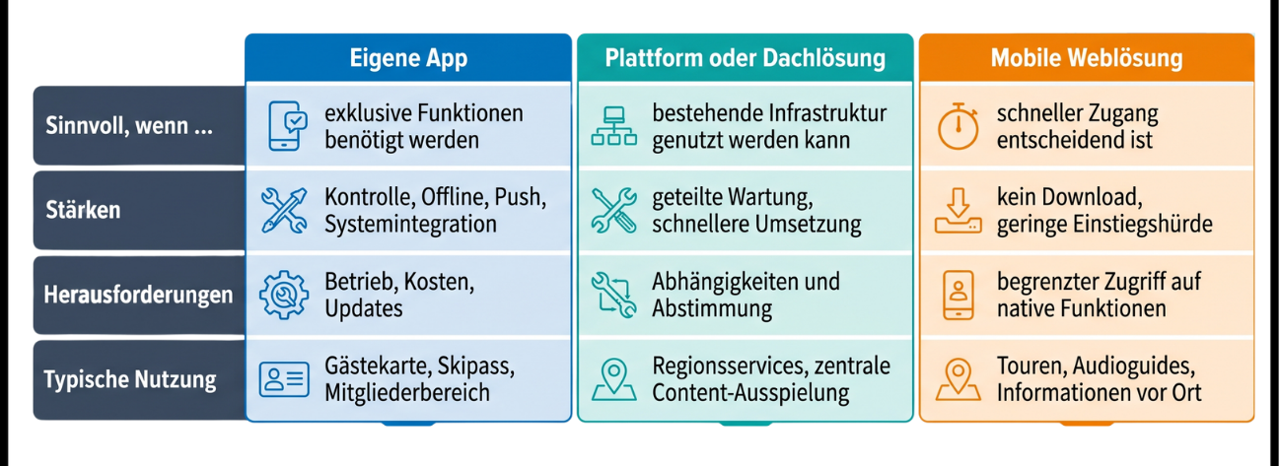
At the end of the workshop, participants have to take a clear position. Vague decisions along the lines of “we’ll look into it” are not enough when shaping a long-term digital strategy.
For digital guest engagement, there are essentially three options:
A dedicated app makes sense when it provides clear, recurring value that cannot be delivered equally well in a mobile browser. This may include a deeply integrated guest card, a ski pass, offline functionality, personalised push notifications or location-based services.
This gives the region a high degree of creative and technical control. At the same time, however, it also assumes responsibility for long-term operation: maintenance, operating system updates, interfaces, support, accessibility and continuous development must be funded and managed over many years.
Not every region needs to develop its entire digital infrastructure from scratch. In many cases, it is more economical to integrate existing services into an established platform, a shared regional solution or an app that is already in use.
This allows technical components, maintenance processes and development costs to be shared across several projects. The region can then focus more of its resources on the areas that truly make a difference to guests: reliable data, up-to-date offers and high-quality content.
A platform solution does not automatically remove all legal responsibility from the operator. However, it can significantly reduce the technical and organisational workload because standards, updates and recurring review processes are managed centrally.
In many cases, a fast mobile web solution is the better choice. Guests can access content directly via a link, QR code or NFC tag—without having to install an app first.
Tours, audio guides, maps, event recommendations and location-based information can now also be delivered convincingly in a mobile browser. What matters is not whether there is an app icon on the home screen. What matters is whether guests can access the right information quickly and easily.
Projects such as the digital city tour in Blaubeuren show that a high-quality mobile experience can work without requiring an app download. Other projects, such as the kärnten.museum, deliberately combine a dedicated app with mobile web access. The right solution therefore always depends on the specific use case.
The strategic question is not “app or no app?”. It is: Which access point delivers the greatest value to guests—and can the region operate it professionally over the long term?
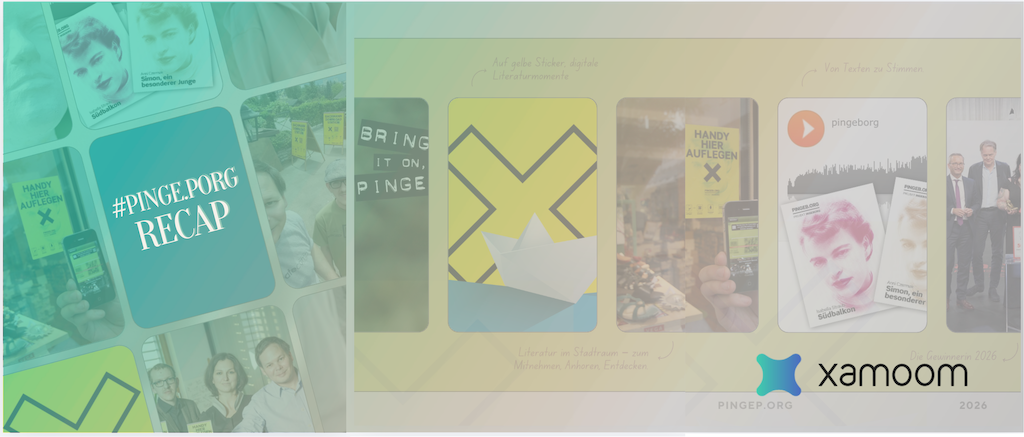
What began with yellow stickers in Klagenfurt is now a platform for digital experiences in the real world.
Sometimes the future starts very small. With a yellow sticker. With a QR code. With an NFC tag. And with an idea that sounded a little crazy at the time: What if literature did not only happen in books, on stage, or in archives — but right in the middle of the city?
For the anniversary of the 50th Days of German-Language Literature, we are not only looking back at a remarkable literary event in Klagenfurt. We are also looking back at our own beginnings. Because before xm systems became xm systems, there was pingeb.org.
And pingeb.org was yellow. Very yellow.
Project Ingeborg started in Klagenfurt in 2012 as a net culture project. The idea: art and literature should become discoverable where people already are — at bus stops, in cafés, in bars, in shops, on public squares, and in many other places across the city. Through yellow stickers with QR codes and NFC tags, passers-by could discover digital content directly on their smartphones.
What sounds almost obvious today was a small experiment with a big impact back then. For a moment, Klagenfurt became a virtual library. Seventy eye-catching stickers made public-domain e-books accessible at 70 different locations. Later, the idea evolved into a free discovery platform for artists from Carinthia — from literature to music, from text to sound.
The name, of course, was no coincidence. Project Ingeborg was a tribute to Ingeborg Bachmann. The timing around the Days of German-Language Literature was also intentional: exactly when literature becomes especially visible in Klagenfurt, it was meant to appear in public space in a new way as well.
pingeb.org was never just a website. It was an invitation: Look closer. Scan. Discover. Listen in. Read on.
This small moment between a physical place and digital content became our starting point. Suddenly, it was clear: places can tell more than fits on a sign. A sticker can open a book. A bus stop can become a stage. A shop window can make music, literature, or art accessible.
This exact idea later became xm systems. In 2014, the cultural project turned into a start-up — with the goal of making the joyful discovery of art, culture, and information possible not only in Klagenfurt, but in many other places as well.
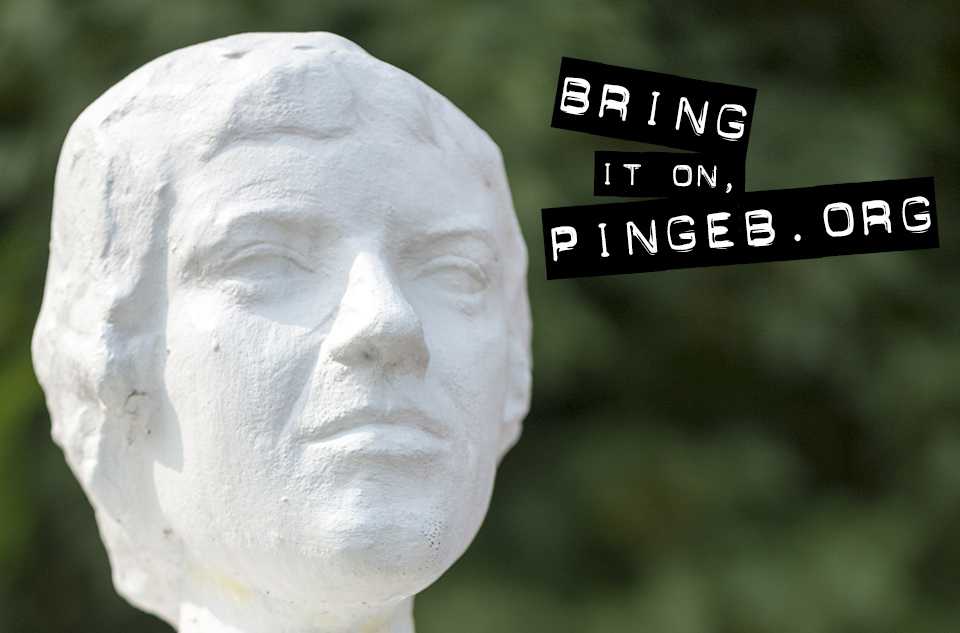
With xm systems, the yellow experiment became a platform: a content management system for real places. Content can be created, managed, and delivered centrally via QR codes, NFC, GPS, iBeacons, or mobile web portals — without every project having to develop its own app from scratch.
The core idea has remained the same to this day: the right story in the right place, at the right time, on the device people already have in their hands.
What began with literature became museum guides, city tours, audio walks, tourism projects, interactive trails, and digital cultural formats. Today, we describe xm systems as a platform for digital experiences in real places — from museum guides and city tours to audio walks and interactive quests.
Perhaps the most exciting development of recent years is this: digital content no longer only informs. It guides, reacts, asks questions, rewards — and plays.
QR codes become quests. Stations become chapters. A tour becomes a story that unfolds step by step. This is exactly where new formats such as wunder.quest, storyGO oder Behold.
With wunder.quest, real places become interactive adventures: players scan codes, solve riddles, and move through a story step by step — directly in the mobile web, without downloading an app.
And that shows how far the journey has come since the first yellow stickers. xm systems was never meant to be just a QR code CMS. Through flexibility, context, and ease of use, it has become a platform where content does not only inform, but activates, accompanies, and becomes part of playful real-world experiences.
Every year, the Bachmann Prize brings something to Klagenfurt that is hard to explain and easy to feel: attention for language. For texts. For debate. For authors who suddenly reach a large audience over the course of just a few days.
In 2026, this feeling was especially strong. The 50th Days of German-Language Literature marked a major anniversary — and the year also coincided with the 100th birthday of Ingeborg Bachmann. Fourteen authors read in Klagenfurt for the Ingeborg Bachmann Prize and five further awards.
The Ingeborg Bachmann Prize 2026 went to Lena Schätte for her text “Was wir tragen”. She also received the BKS Bank Audience Award and the “Festival Writer” award of the Carinthischer Sommer.
We warmly congratulate Lena Schätte — and all award winners of this year’s Days of German-Language Literature.
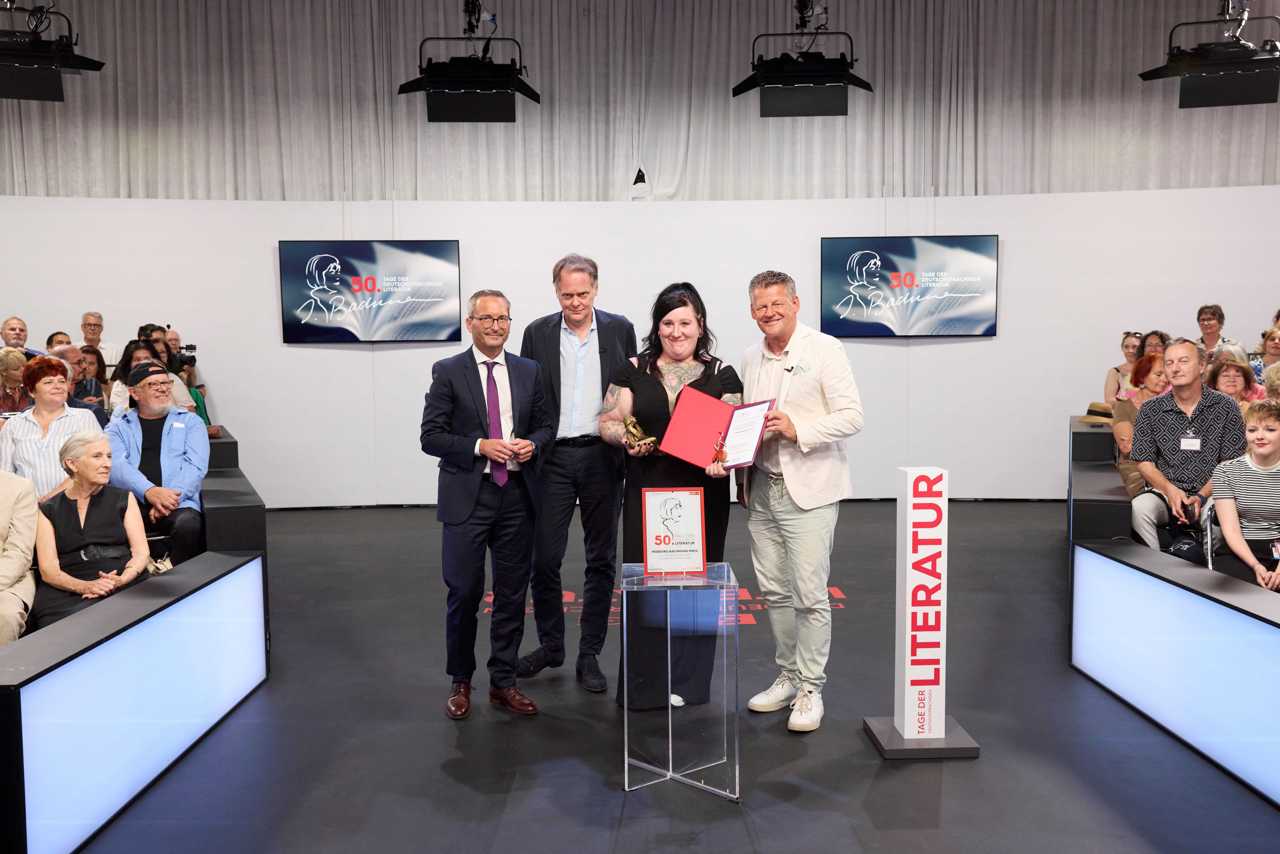
For us, this anniversary is therefore more than an occasion for congratulations. It is also a moment to say thank you: to pingeb.org, to the people who made this project possible, to the artists who contributed content, and to everyone who once saw a yellow sticker and curiously pulled out their smartphone.
The yellow sticker was never just a marker. It was a promise: there is something to discover here.
That promise still guides us today — in xm systems, in wunder.quest, in xm systems.play, in storyGO, in Behold, and in all the projects that bring digital content back to where it has the greatest impact: into the real world.
From pingeb.org to xm systems, it has been quite a journey.
And perhaps that is exactly why it still feels a little like the beginning.
From AI quests to smart operations—xm systems is more than a CMS. Here are 10 things you probably didn’t know you can build.
Most people think they understand xm systems after the first demo.
“Ah, a CMS for QR codes, mobile pages, maybe an app.”
That’s not wrong. But it’s also not the full picture.
Because once you start combining content, location, and logic, something interesting happens: xm systems becomes a toolkit for building entirely different kinds of experiences.
Some expected. Some… not so much.
Here are 10 things you probably didn’t know you can build with xm systems.
Yes, you can use xm systems as a link-in-bio tool.
But here’s the twist: it doesn’t have to be static.
Show different content based on location, language, or context. Turn one link into a dynamic entry point that adapts to your audience.
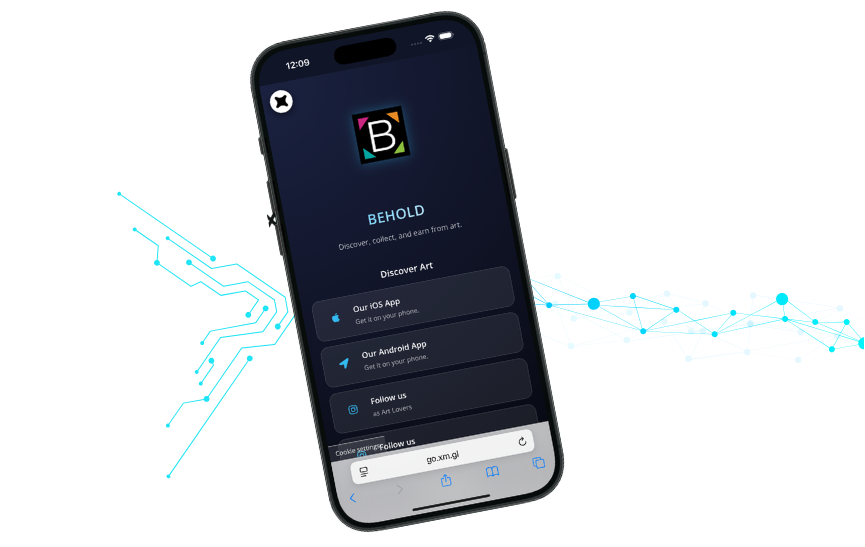
What used to take hours of preparation—writing riddles, planning routes, setting up clues—can now be generated in minutes.
With wunder.quest, we’ve shown how xm systems can power fully interactive adventures for families and explorers.
And the same logic works for cities, tourism, and events.
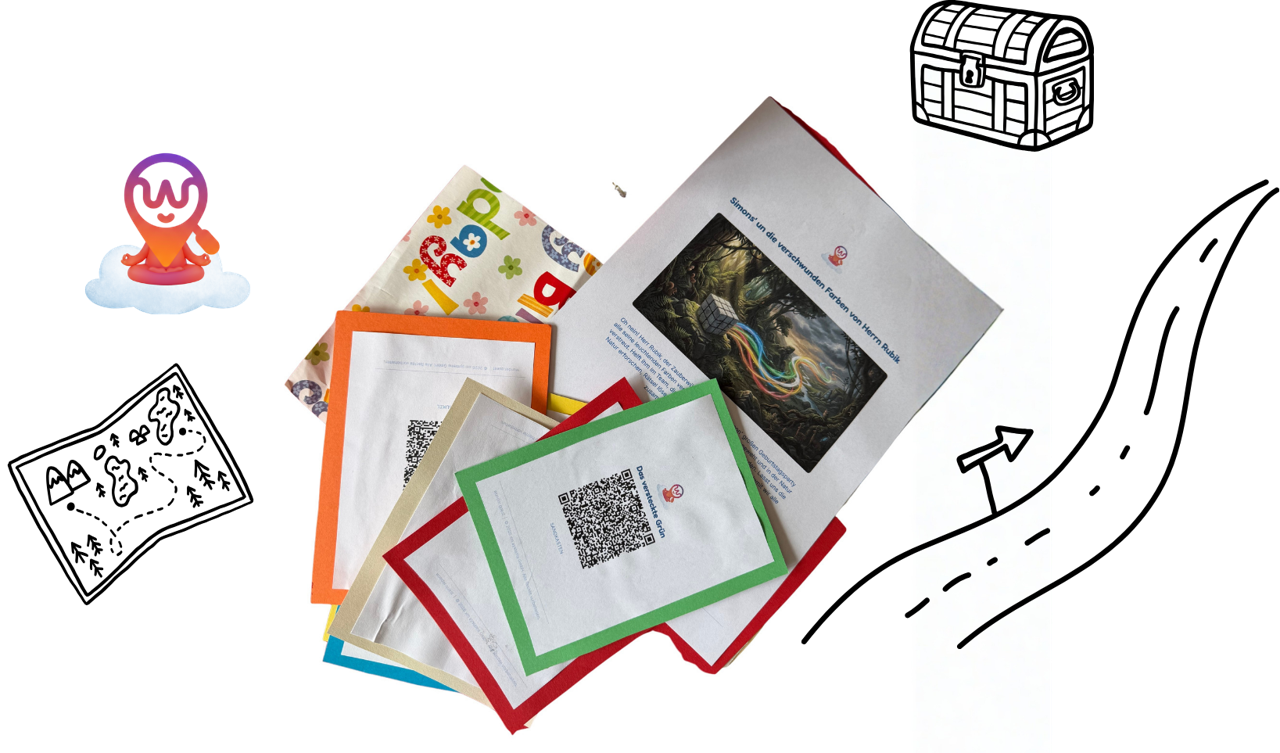
Creating audio guides used to be expensive and time-consuming.
Now, with built-in AI voice features, you can turn text into spoken content instantly—directly in the CMS.
Projects like the Carinthia Museum show how powerful audio storytelling can be when it’s easy to produce and update.
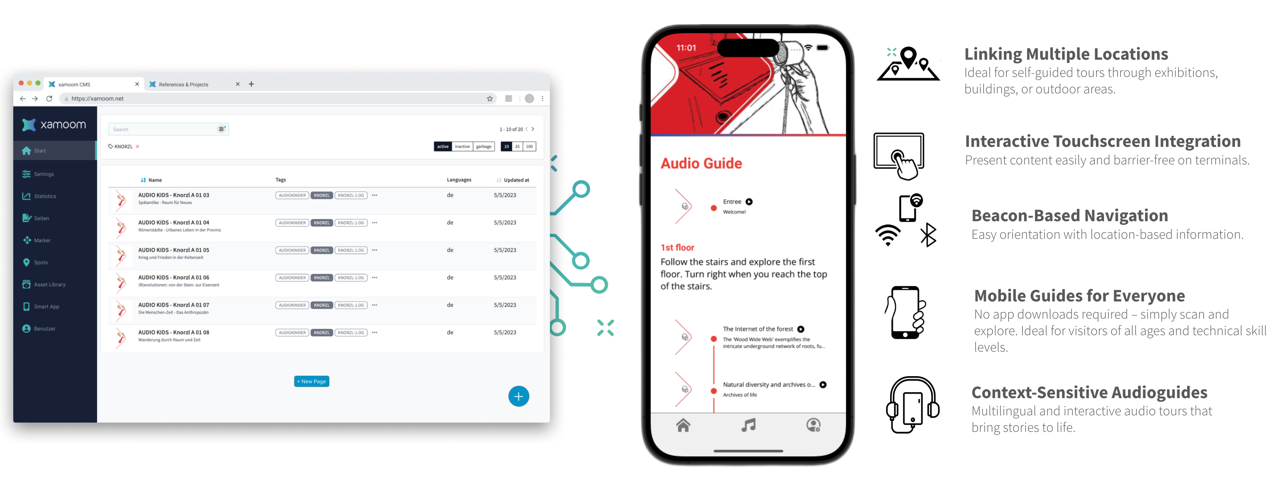
This one surprises most people.
xm systems isn’t just for visitors—it can also support internal workflows.
Think of it as a lightweight digital layer for the physical world.

Not every experience needs an app download.
With xm systems, entire cities can become interactive—accessible instantly via smartphone.
Projects like Blaubeuren Tells Its Story show how storytelling, navigation, and discovery can come together in a seamless mobile experience.

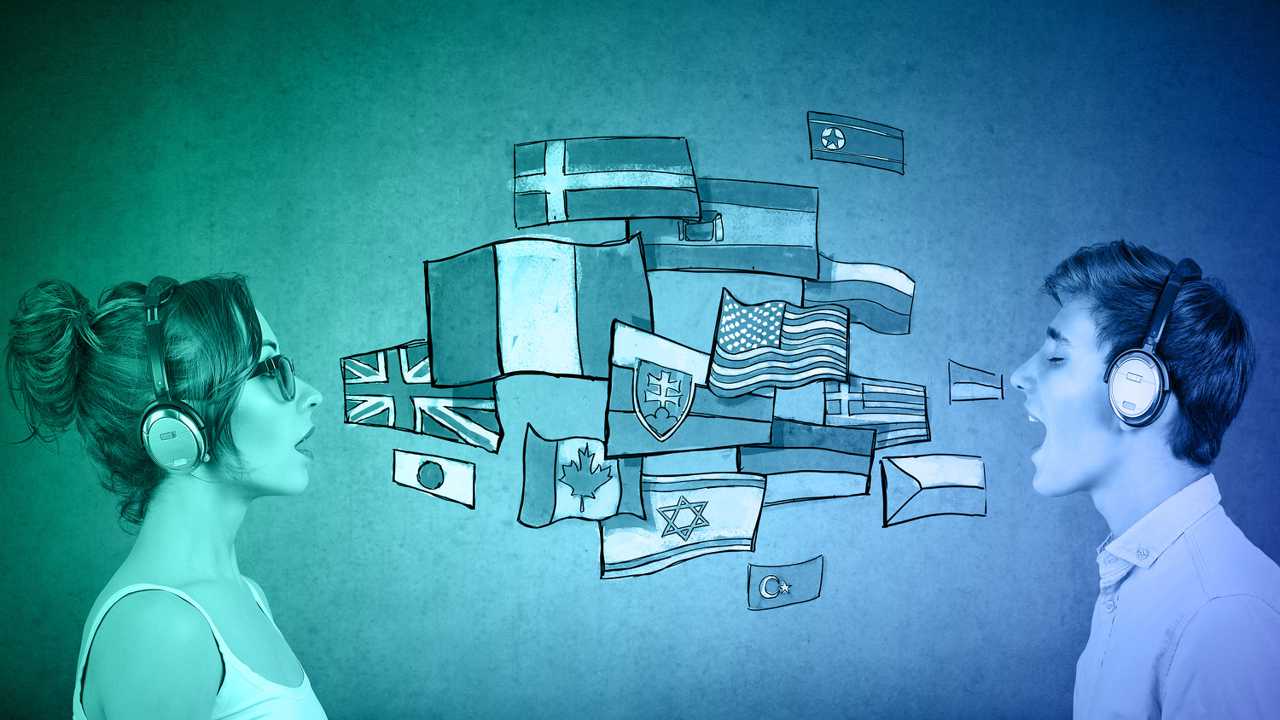
Serving international audiences is hard.
Unless your content adapts automatically.
With xm systems, users get content in their own language—without switching settings or downloading anything.
It’s a small detail that makes a huge difference in user experience.
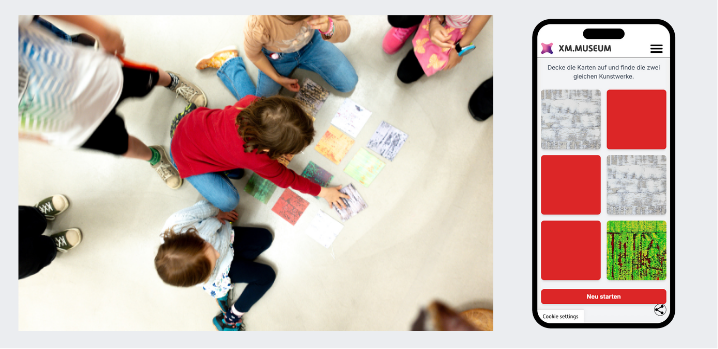
Learning doesn’t have to feel like learning.
By combining quizzes, storytelling, and location-based triggers, xm systems turns educational content into interactive journeys.
The Geopark Karawanken is a great example of how knowledge becomes exploration.
Most QR codes are static. You print them—and they’re fixed forever.
With xm systems, that’s not the case.
You can change what a QR code delivers at any time—without touching the printed material.
But it goes further:
What looks like a simple scan becomes a flexible, evolving experience.
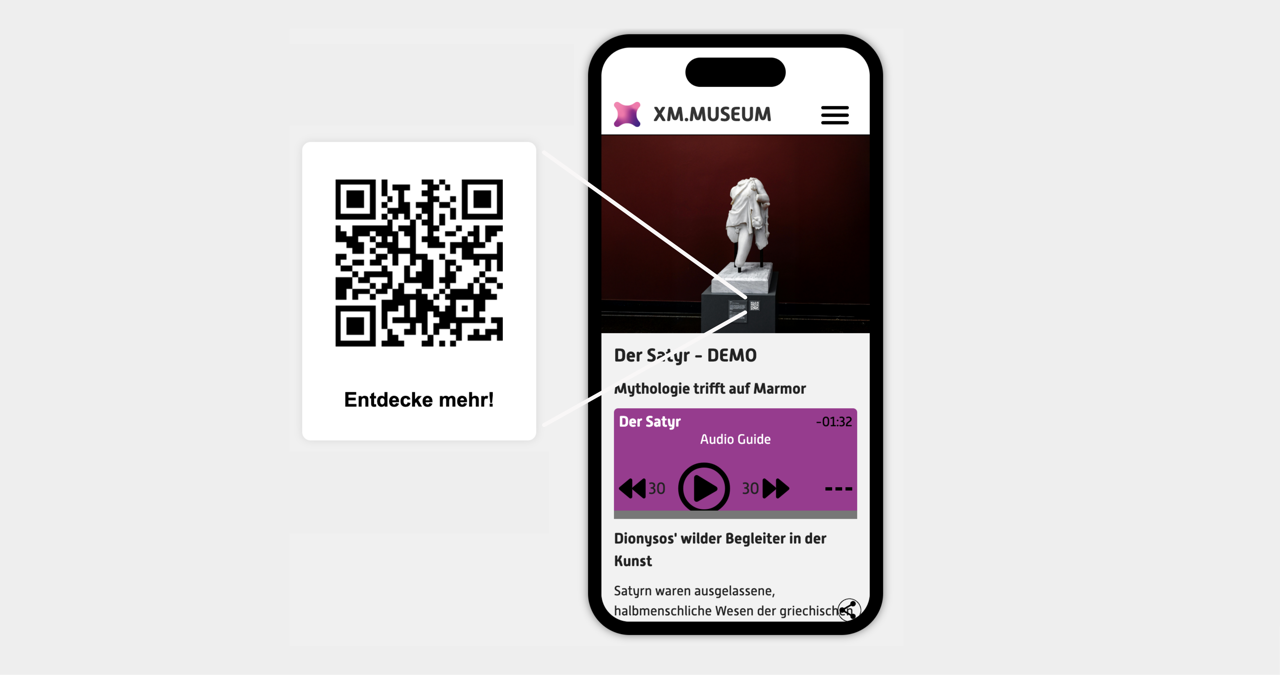
Think of the smartphone as a personal interface for physical spaces.
Whether in museums, events, or retail environments, xm systems turns every location into a multi-layered experience.
The physical world becomes the stage. The phone becomes the guide.
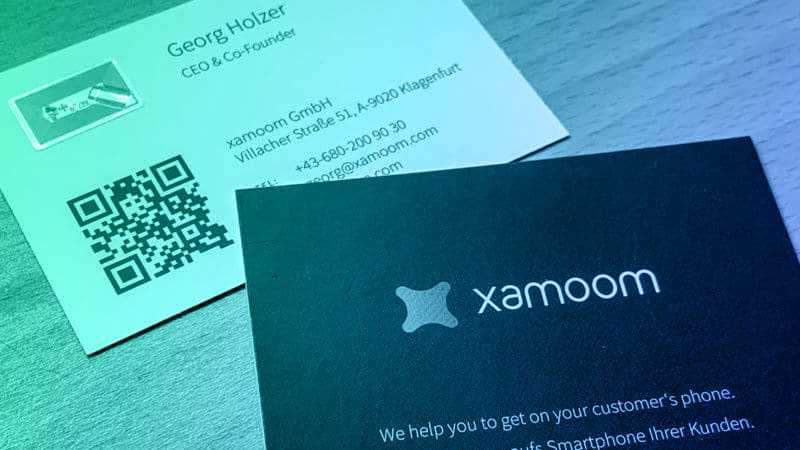
Printed business cards are outdated the moment something changes.
With xm systems, your business card becomes a living digital profile.
One QR code. Always current.
And much harder to throw away.
So what is xm systems, really?
A CMS? Yes. A storytelling platform? Also yes. A game engine? Sometimes. An operations tool? Surprisingly, yes.
The real answer is simpler:
xm systems is a system for connecting digital content with the real world—whatever that means for your use case.
And chances are, you’re only using a fraction of what’s possible.
Curious what you could build?
Start exploring—and let’s turn your idea into an experience.